

Pinpointing a repeating FRB to a compact radio source with the EVN
Alexandra Moroianu
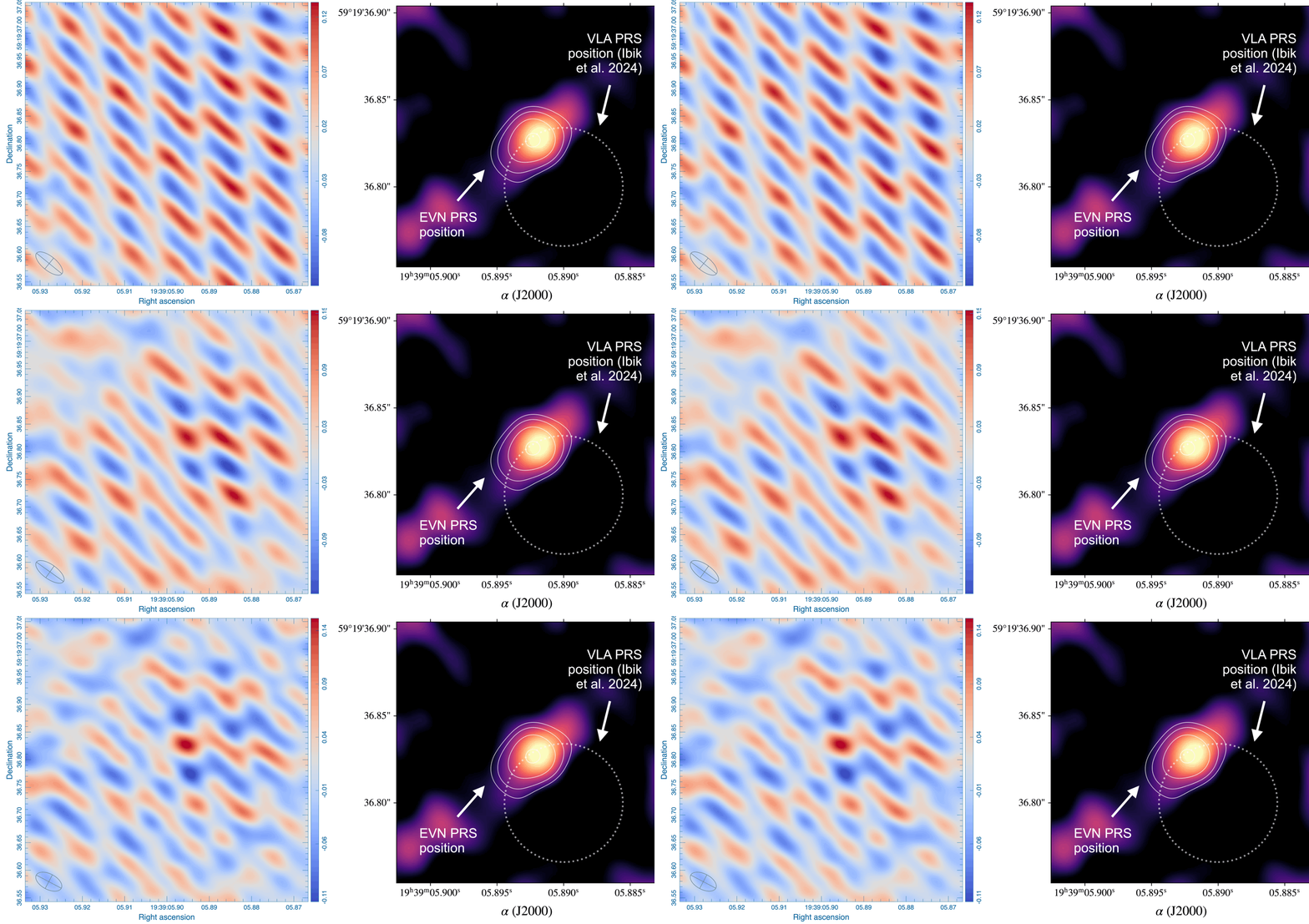
The co-location of the FRB and PRS, together with the highly dense and magneto-ionic environment inferred from the FRB’s dispersion measure (DM) and Faraday rotation, strengthens the growing evidence that PRS-associated FRBs originate in extreme, dynamic environments. A DM decomposition analysis further constrains the rest-frame host DM contribution to >1228 pc cm-3 - the largest known for any FRB to date. The host galaxy is a low-metallicity star-forming dwarf galaxy at z = 0.12817, resembling those of other FRB-PRS systems. The emerging similarities across these systems raise the question of whether these FRBs represent a distinct population or simply an environmental consequence. Continued monitoring of known FRB-PRS systems, alongside the discovery of new ones, will help constrain PRS models and bring us closer to understanding what these sources represent within the wider FRB population.
Link to the paper:
Alexandra M. Moroianu et al, 2026, ApJL 996 L16
Contact:
Alexandra Moroianu, UvA, ASTRON, and JIVE. Email: a.m.moroianu@uva.nl
Benito Marcote, JIVE. Email: marcote@jive.eu